

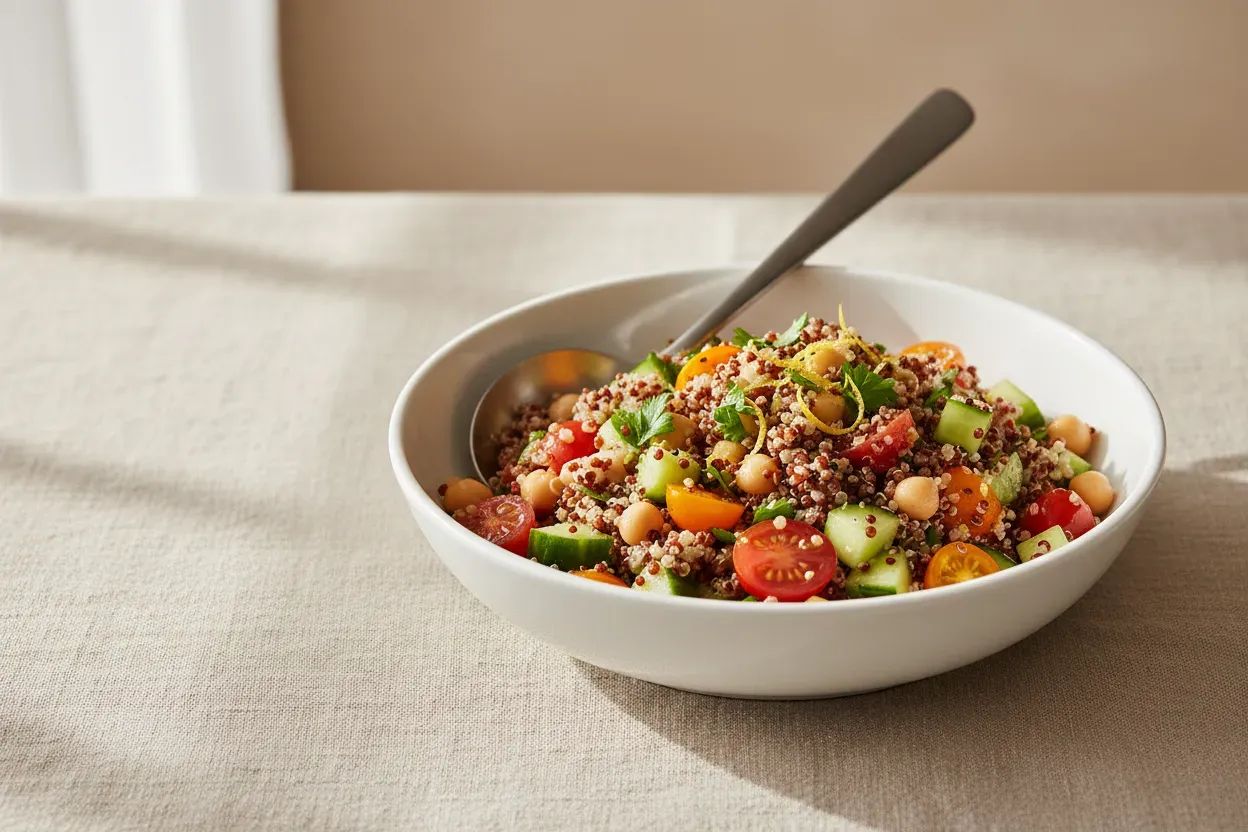
Build Reliable Home Baseline

One of the most effective approaches is shifting the focus from restriction to preparation—helping clients feel equipped rather than limited. For someone newly diagnosed with celiac disease, social eating becomes easier when they have a simple "default plan" they can rely on: how to communicate their needs briefly, what safe foods they can pre-check, and when it's better to eat beforehand and simply join socially rather than risk uncertainty. In my work with NYC Meal Prep, I've seen quality of life improve most when clients stop trying to control every situation and instead build a consistent baseline of safe, ready-to-go meals they can trust at home. That reduces anxiety around accidental exposure and gives them more confidence to navigate social settings without feeling like they're always on guard.
Share Delicious Gluten-Free Dishes
As a Registered Nutritionist, I support clients with newly diagnosed celiac disease through helping them learn how to navigate social eating by promoting proactive communication, preparation and mindset changes to decrease anxiety and isolation.
Key Strategies
It's recommended that you speak with the host or restaurant in advance about your dietary needs to ensure that the venue can make the necessary accommodations, such as marking meals that are gluten-free, preparing gluten-free meals or identifying safe meal options. Eating gluten-free at events means that you are eating safely, and you are also educating and starting up positive discussions about celiac disease.
Bringing gluten-free goodies with you just means that you have something to fall back on in case of an emergency and you are not putting yourself in a risky position because you are hungry. Eating beforehand to avoid temptation to make unsafe choices. A network of close friends and relatives enlists friends to stand up for clients in group situations.
Top Quality-of-Life Booster
A great way to enhance your quality of life is to bring and share a yummy gluten-free food! This means a safe meal, as well as normalisation of the diet for others, in order to decrease stigma and increase inclusion. This is seen to improve many clients' self-confidence and social interaction.
Create Restaurant Safety One-Pager

- Creating a one-pager with safe/non-safe foods, and cross-contamination precautions that they can show restaurants to guide them to make safe options.
- Having 2-3 regular safe spots/options.
- Throw a celiac awareness/gluten-free party to raise awareness amongst friends and family - provide instructions on how to prepare coeliac-friendly meals.
Call Ahead for Confidence

One of the most impactful strategies I share with newly diagnosed celiac clients is what I call the "safe anchor" approach when eating socially. Before any group meal , whether it's a restaurant, a friend's dinner, or a work event - I have them identify just one safe item they can eat without anxiety. Just one. That single anchor completely changes their mindset from panic to control.
The strategy that has genuinely improved quality of life the most for my clients is learning to call ahead. It feels awkward at first but every client who commits to it tells me within a few weeks it becomes second nature. A quick call to the restaurant asking about gluten free options or cross contamination protocols takes two minutes and eliminates hours of anxiety at the table.
The social confidence piece is just as important as the nutrition piece. Celiac clients often start avoiding social situations entirely because food is so central to them. I always remind them - your job at a social meal is to enjoy the company, not to eat everything on the table. Once they internalize that, eating out stops feeling like a minefield and starts feeling manageable again.