

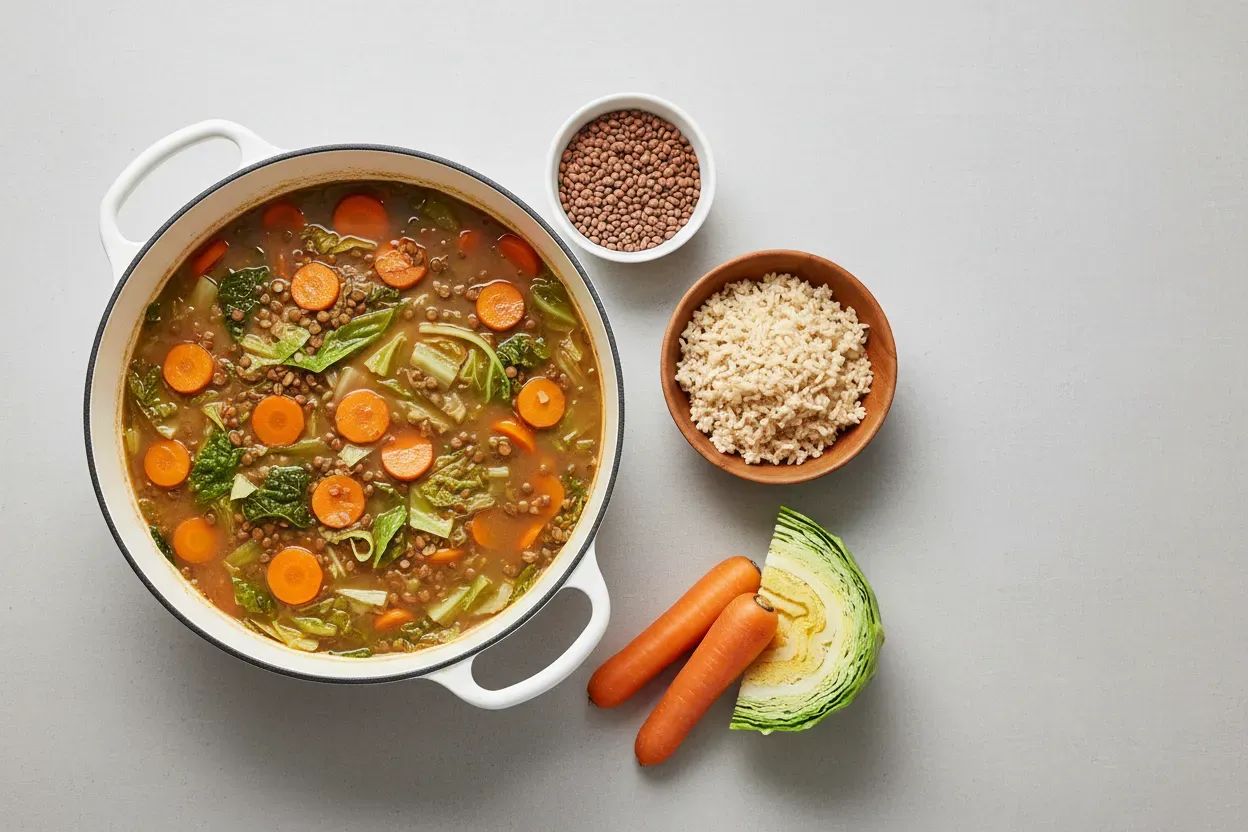
Use What You Have First

If there's one habit that transformed my grocery bill without changing what I eat, it wasn't coupons or cutting out foods I love. It was something much simpler: I stopped throwing food away.
It turns out, the average household wastes a surprising amount of groceries each week—produce that spoils, leftovers that go untouched, and "just in case" items that never get used. That waste adds up quickly, both nutritionally and financially.
The strategy that changed everything? Shop with a "use-what-you-have-first" mindset.
Before making a grocery list, take five minutes to check the fridge, freezer, and pantry. Instead of planning meals from scratch, build them around what's already there. That half bag of spinach becomes part of a stir-fry. The leftover chicken turns into tacos or soup. Even small items—like herbs or sauces—get used before they expire.
It's a subtle shift, but a powerful one. Grocery shopping becomes less about buying more and more about finishing what you've already paid for.
Another key part of this approach is planning meals that overlap ingredients. For example, if you buy a bunch of cilantro or a container of yogurt, plan two or three meals that use it in different ways. This prevents those "one-use" ingredients from quietly going bad in the back of the fridge.
Freezing is another underrated tool. Bread, cooked grains, meats, and even many vegetables can be frozen before they spoil, extending their life by weeks or months. Leftovers can be portioned and saved for busy days instead of being forgotten.
The result? Less waste, fewer last-minute grocery runs, and a noticeably smaller bill.
For many households, this single habit can reduce grocery spending by 15% to 25%. On a $150 weekly budget, that's roughly $100 to $150 saved each month—without buying cheaper food or eating less.
And perhaps most importantly, it doesn't feel restrictive. You're still eating the same foods—just more intentionally.
In a time when grocery costs feel increasingly out of control, the most effective strategy might not be what you buy, but what you don't throw away.
Base Dinners on Repeatable Basics

A reliable approach is to stop building meals around recipes and instead build them around a short list of flexible staple ingredients you rotate every week. Once that shift happens, most of the "hidden cost" in grocery shopping disappears because you're no longer buying one-off ingredients that sit in the fridge half-used or go off before they're finished.
In practice, it looks like anchoring your shop around a few protein sources, a couple of grains or carb bases, and a consistent set of vegetables you can use across multiple meals. Chicken, eggs, lentils, rice, oats, frozen veg, and a small range of sauces or spices can cover far more meals than most people expect if you're willing to repeat combinations and vary preparation rather than constantly changing ingredients.
The biggest financial win doesn't come from cheaper items alone, but from waste reduction. When you consistently finish what you buy, you effectively "create" savings because you're no longer paying for food that gets thrown away or replaced mid-week.
For many people, this kind of structure typically reduces grocery spend somewhere in the region of 20-30%, sometimes more if they were previously doing a lot of spontaneous or recipe-led shopping. The nutrition doesn't drop because the focus shifts to consistency and balance rather than novelty, and you can still rotate flavours to keep meals from feeling repetitive.
Stretch Protein with Seasonal Batches

When I started overseeing meal planning at Sunny Glen Children's Home, our grocery costs were eating up way too much of our budget. We were spending around $4,200 monthly to feed 24 kids, and I knew we could do better.
The game-changer was implementing seasonal batch cooking with protein stretching. Every Sunday, I'd sit down with local grocery flyers and plan our entire week's menu around what produce was in season and on sale. Then I'd bulk prep bases like rice, beans, and roasted vegetables that could become different meals throughout the week.
The protein stretching part was key. Instead of serving large portions of meat, I started combining smaller amounts of animal protein with plant-based options. A single chicken breast could stretch across a huge pot of soup when combined with beans and seasonal vegetables. Taco night used half the ground beef because I'd mix in black beans and lentils. The kids actually preferred it because the meals were more flavorful and filling.
I also partnered with a local food bank that had an excess produce program. We'd get boxes of slightly bruised fruits and vegetables that were perfectly fine for cooking. This alone saved us about $300 monthly.
Within three months, we dropped our grocery bill from $4,200 to $2,800 per month. That's a $1,400 monthly savings, or about $16,800 annually. The best part was that our kids were eating better than ever. More variety, more vegetables, and honestly more home-cooked flavor. Our nurse even noticed improved energy levels during regular health checkups.
The trick wasn't eating less. It was eating smarter. Any family can do this with some planning.
Run a Tight Six-Meal Rotation

I'm Runbo Li, Co-founder & CEO at Magic Hour.
The single biggest thing that cut my grocery spending was treating meal prep like a production system, not a creative exercise. I stopped browsing the store and started batch-planning around a rotating set of six meals built on the same base ingredients. Rice, eggs, chicken thighs, frozen vegetables, beans, and whatever fruit is in season. That's the core. Everything else is a flavor modifier, not a new grocery line item.
Before I did this, I was spending around $600 a month on groceries in the Bay Area, which honestly felt unavoidable. After locking in the system, I dropped to roughly $350. That's over $3,000 a year back in my pocket, and my diet actually got better because I stopped impulse-buying snacks and random ingredients for recipes I'd cook once.
The key insight is that variety is the most expensive ingredient in your kitchen. People think eating well means eating differently every night. It doesn't. It means eating nutrient-dense food consistently. I eat some version of a chicken and vegetable stir-fry four nights a week. I change the sauce, the spice profile, or the vegetable mix. My body doesn't know the difference between Tuesday's garlic ginger version and Thursday's chili lime version, but my wallet absolutely knows the difference between buying 12 unique ingredients versus 6 staples.
I also started buying frozen vegetables instead of fresh for anything that gets cooked. Frozen broccoli, spinach, and mixed stir-fry bags are cheaper, last longer, and are flash-frozen at peak nutrition. The "fresh is better" idea costs people real money for zero measurable health benefit once heat hits the pan.
The grocery store is designed to make you wander and discover. Treat it like a warehouse pickup instead. Know your list, execute, get out. Creativity belongs in the seasoning, not the shopping cart.
Plan around Weekly Flyers and Whole Foods

Here's the thing: when I first started running Doggie Park Near Me, my grocery bill was out of control. Between feeding my own dogs and keeping my family fed, I was spending over $1,200 a month without even realizing it. The one strategy that changed everything for me was meal prepping around weekly sale flyers combined with buying whole foods instead of pre-packaged items.
I know that sounds almost too simple, but hear me out. Every Sunday morning, I'd sit down with the grocery store flyers from three different chains in my area. I'd plan the entire week's meals around what was on sale, especially proteins and produce. If chicken thighs were on sale, we'd eat chicken-based meals that week. If ground turkey was the deal, we'd pivot. Instead of buying boneless skinless chicken breasts at full price, I'd grab the whole bird and break it down myself. That single swap saved me about $4-5 per chicken, and we were eating through two birds a week.
The second part of the strategy was ditching anything pre-cut, pre-washed, or pre-seasoned. Those convenience items carry a massive markup, sometimes 40-60% more than the whole version. I started buying whole carrots instead of baby carrots, block cheese instead of shredded, and whole heads of lettuce instead of bagged mixes. I'd spend about 45 minutes on Sunday afternoon washing and prepping everything into containers for the week.
Within three months, my grocery bill dropped from around $1,200 to roughly $720 a month. That is nearly $500 in monthly savings, which adds up to about $6,000 a year. The nutrition didn't suffer one bit either. If anything, we ate better because I was cooking more whole foods and fewer processed items. My dogs even got in on it since I'd sometimes use the vegetable scraps for homemade dog treats, which saved me another $30-40 monthly on store-bought treats.
If you're looking to cut your grocery spending, start with the sale flyers and commit to one prep day a week. It really does make that much of a difference.