

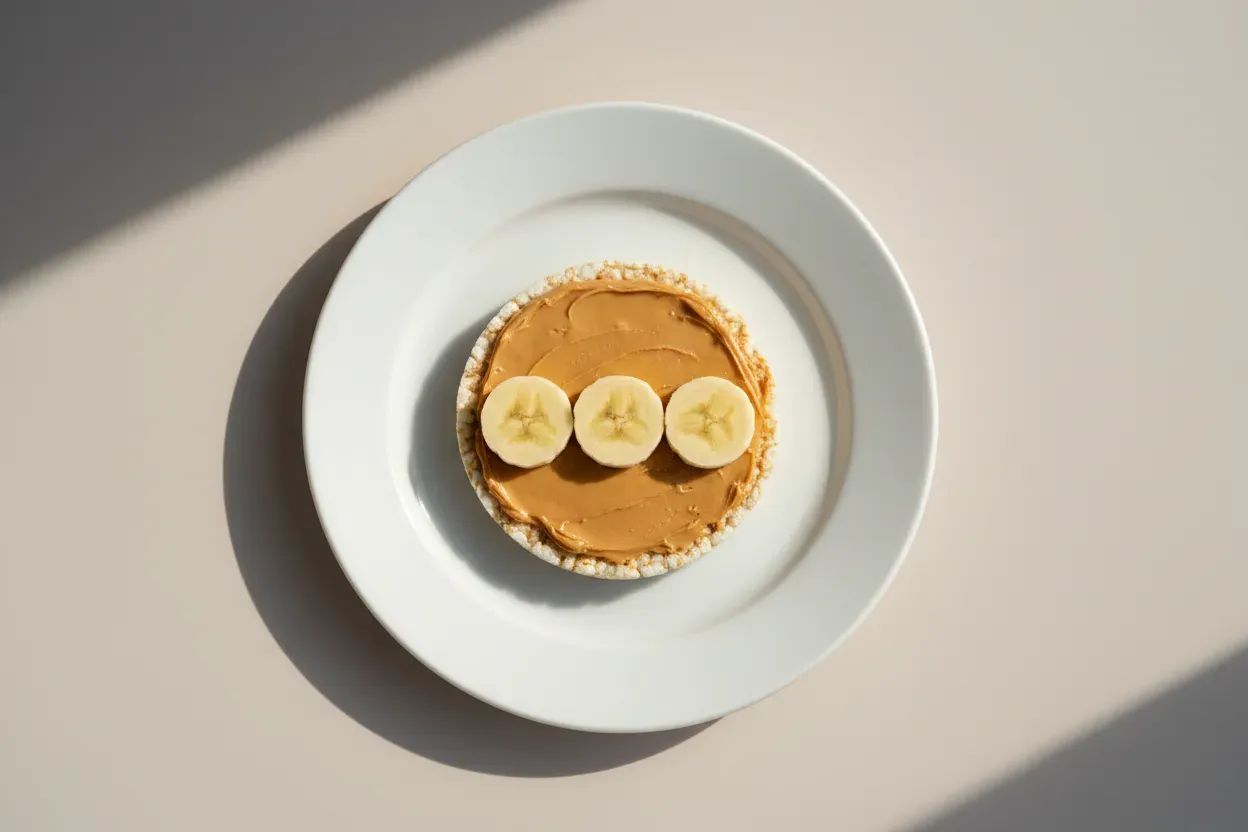
Shift to Small Preworkout Carbs

Early morning training is mostly a digestion problem, not a "lack of discipline" problem. The gut is still waking up, blood flow is slightly lower, and anything heavy or high-fibre tends to sit badly once movement starts.
The most reliable adjustment is to shift away from a full pre-workout meal and instead use a very small, low-fibre, fast-digesting carbohydrate source about 20-40 minutes before training, then move the main breakfast to after the session.
A simple pairing that tends to work well is something like a banana on its own, or a small slice of toast with a thin layer of honey, sometimes alongside a bit of water or diluted juice. The key is keeping fat and fibre very low so the stomach empties quickly, but still giving enough glucose availability to support performance.
What often makes the biggest difference isn't just the food choice but the timing discipline around it. People who struggle usually either eat too much too close to training, or nothing at all and then feel flat halfway through. Moving the bulk of nutrition post-workout tends to resolve both issues at once, because you're no longer asking the body to digest and perform hard work simultaneously.
Over time, many clients also find they need less pre-training fuel than they think. Once the nervous system adapts to the routine, a small consistent intake becomes enough to maintain output without any stomach discomfort.
Choose Yogurt Berries and Nuts

I help early-morning clients fuel for performance while avoiding stomach upset by recommending a simple, easy-to-digest snack that balances protein, fiber, and healthy fat. One pairing that has worked reliably in my practice is Greek yogurt with berries and a small handful of nuts. It takes under 10 minutes to prepare, travels well, and provides protein to stabilize blood sugar, fiber to slow digestion, and fat to curb rebound hunger without leaving clients feeling sluggish. I often have clients use it as a quick pre-work breakfast on early training days.
Use a Sugar Rinse Then Spit
Rinsing the mouth with a carbohydrate solution can cue the brain to push harder even without swallowing. Receptors in the mouth sense sugar and send signals that lower the feeling of effort. A 5 to 10 second swish with a simple carb drink, then spit, works well before and during short morning sessions. This method avoids gut load and is helpful when early eating feels tough.
It suits workouts under an hour where fuel needs are low. It also keeps dental risk lower than frequent sipping, but water rinses after can help. Try a short swish protocol in your next early workout and track how it feels.
Plan a Light Early Dinner
Planning the last meal of the day can set up steady morning energy with little stomach stress. A balanced dinner that favors easy carbs and moderate protein helps top off glycogen overnight. Finishing the meal two to three hours before bed can support sleep and digestion. Choosing lower fiber and lower fat items keeps the gut calm for dawn sessions.
A small glass of water and a pinch of salt can support fluid balance without bloating. The result is a lighter need for food on waking and a smoother warm up. Map out a simple evening meal today to cover tomorrow’s early training.
Sip a Dilute Sports Mix
A lightly mixed sports drink can bridge the gap between fasted training and a full breakfast. A lower strength mix lowers the chance of cramps and sloshing while still giving sugar and sodium. Small sips in the 10 to 15 minutes before the warm up can raise blood glucose without crowding the gut. Keeping total volume modest also helps prevent bathroom trips.
This tactic works well for high intensity sets that last 30 to 60 minutes. Warmer days may call for a touch more sodium, but keep the mix gentle. Prepare a light bottle ahead of time and test your tolerance.
Pick Low FODMAP Fuel Choices
Picking low-FODMAP carbs can cut gas, cramping, and urgent bathroom trips in early training. Many athletes react to excess fructose, lactose, or sugar alcohols when the gut is not fully awake. Simple glucose based options and low fiber starches tend to sit better in this window. Keeping portions small and spacing them out can further ease the load.
Label checks help avoid hidden polyols in mints, bars, and sugar free drinks. This approach can make short, hard sets feel smoother and safer on the gut. Choose one low-FODMAP swap this week and see how your stomach responds.
Chew Caffeine Gum for Quick Lift
Caffeine gum can deliver a quick lift without the acid load that coffee can bring. Absorption through the cheek acts fast and may be gentler on the stomach at dawn. A low to moderate dose is often enough to sharpen focus and reduce effort feel. Chew for a few minutes, then park the gum in the cheek to keep levels steady.
Avoid using it late in the day to protect sleep quality. Pairing it with water rather than dairy or juice can further reduce gut stress. Trial a small dose of caffeine gum in a short workout and note your response.